Joey L.

  • home
  • quick portfolio
  • personal
  • commissions
  • videos
  • blog
  • tutorials
  • bio
  • faq
  • gear
  • contact
previous photo next photo use keyboard arrows to navigate
  • 

In Labaltoy, this government-built school certainly stands out in the somewhat traditional village. The modern looking structure with it’s tin roof and concrete floor contrasts against a row of huts made completely from wood and mud. The school’s students also provide a stark contrast- the traditional clothing of the Hamar girls themselves in this contemporary setting. Their primary lessons involve learning Amharic, Ethiopia’s national language. English is another focus.

    Portrait of Kunki Dula


In Labaltoy, this government-built school certainly stands out in the somewhat traditional village. The modern looking structure with it’s tin roof and concrete floor contrasts against a row of huts made completely from wood and mud. The school’s students also provide a stark contrast- the traditional clothing of the Hamar girls themselves in this contemporary setting. Their primary lessons involve learning Amharic, Ethiopia’s national language. English is another focus.
  • Portrait of Guti Kuli and Notebook

    Guti Kuli

    Portrait of Guti Kuli and Notebook
  • Present and future students: Guti Kuli, Asi Kala, Wollyso Muga, Keli Kyma, Ente Algo and Kunki Dula. Hamar Tribe

    Village Classroom

    Present and future students: Guti Kuli, Asi Kala, Wollyso Muga, Keli Kyma, Ente Algo and Kunki Dula. Hamar Tribe
  • The Hamar are a agro-pastoral tribal group living amongst the many diverse ethnic groups that occupy Ethiopia’s Lower Omo Valley. A complex belief system with deep animistic roots intertwines their daily lives with their livestock, a central part of Hamar culture. The women are well known for putting beautiful red river clay in their hair and skin.
 (Left to right): Buli Ure, Kydo Damo, Godi Mana, Kaja Kala, Bazo Damo, Wollyso Muga, Keli Kyma, Godi Kala, Wotu Shada, Kyla Mama and Bulla Ure.

    Hamar Women at Sunrise

    The Hamar are a agro-pastoral tribal group living amongst the many diverse ethnic groups that occupy Ethiopia’s Lower Omo Valley. A complex belief system with deep animistic roots intertwines their daily lives with their livestock, a central part of Hamar culture. The women are well known for putting beautiful red river clay in their hair and skin.
 (Left to right): Buli Ure, Kydo Damo, Godi Mana, Kaja Kala, Bazo Damo, Wollyso Muga, Keli Kyma, Godi Kala, Wotu Shada, Kyla Mama and Bulla Ure.
  • A woman of the Bodi tribe has fallen ill and died. The elder women of the village shout to the spirits and chant of her death to bring her soul to peace. The men perform a ceremonial procession and will guard the body of the deceased for 3 months


    Procession Under Tuma

    A woman of the Bodi tribe has fallen ill and died. The elder women of the village shout to the spirits and chant of her death to bring her soul to peace. The men perform a ceremonial procession and will guard the body of the deceased for 3 months

    Bodi Me’en Tribe, Lower Omo Valley, Ethiopia
  • The men fear the qamtut, a rumored grave robber hidden among the tribe who feasts on the flesh of the newly dead in the cover of night.

    Portrait of a Bodi Warrior

    The men fear the qamtut, a rumored grave robber hidden among the tribe who feasts on the flesh of the newly dead in the cover of night.


    Bodi Me’en Tribe, Lower Omo Valley, Ethiopia
  • Oral traditions are shared with children from a young age. The tribe’s creation story tells of their ancestors crawling from a hole in the ground near the Omo River

    Young Bodi Children

    Oral traditions are shared with children from a young age. The tribe’s creation story tells of their ancestors crawling from a hole in the ground near the Omo River
    Bodi Me’en Tribe, Lower Omo Valley, Ethiopia
  • Villages consist of a small number of grouped together huts made of stick walls and grass roofs

    Bodi Girls

    Villages consist of a small number of grouped together huts made of stick walls and grass roofs
    Bodi Me’en Tribe, Lower Omo Valley, Ethiopia
  • “I have my own personal God.I walk over to my favorite tree, look upon the skies and pray."

    Saragolea

    “I have my own personal God.I walk over to my favorite tree, look upon the skies and pray."
    Bodi Me’en Tribe, Lower Omo Valley, Ethiopia
  • Saragolea

    Saragolea

  • “Our goats are very valuable to us and a respected member of the tribe. They give us both food and clothing.”

    Portrait of Oudulomasha

    “Our goats are very valuable to us and a respected member of the tribe. They give us both food and clothing.”
    Bodi Me’en Tribe, Lower Omo Valley, Ethiopia
  • The Bodi believe in a sky God they call Tuma, who brings the rains and is the life force of all living creatures.

    Portrait of Bodi Man

    The Bodi believe in a sky God they call Tuma, who brings the rains and is the life force of all living creatures.
    Bodi Me’en Tribe, Lower Omo Valley, Ethiopia
  • After the introduction of missionaries into the Omo Valley the Arbore now share a mixture of monotheistic and traditional animist beliefs

    Rufo

    After the introduction of missionaries into the Omo Valley the Arbore now share a mixture of monotheistic and traditional animist beliefs
    Arbore Tribe, Lower Omo Valley, Ethiopia
  • Portrait of Rufo

    Portrait of Rufo

  • Lago places strong importance on her identity as a member of the Arbore. Each tribe of the Omo valley has a specific way of dressing and decorating themselves as a way to visually associate themselves with their unique customs and values.

    Portrait of Lago

    Lago places strong importance on her identity as a member of the Arbore. Each tribe of the Omo valley has a specific way of dressing and decorating themselves as a way to visually associate themselves with their unique customs and values.
    Arbore Tribe, Lower Omo Valley, Ethiopia
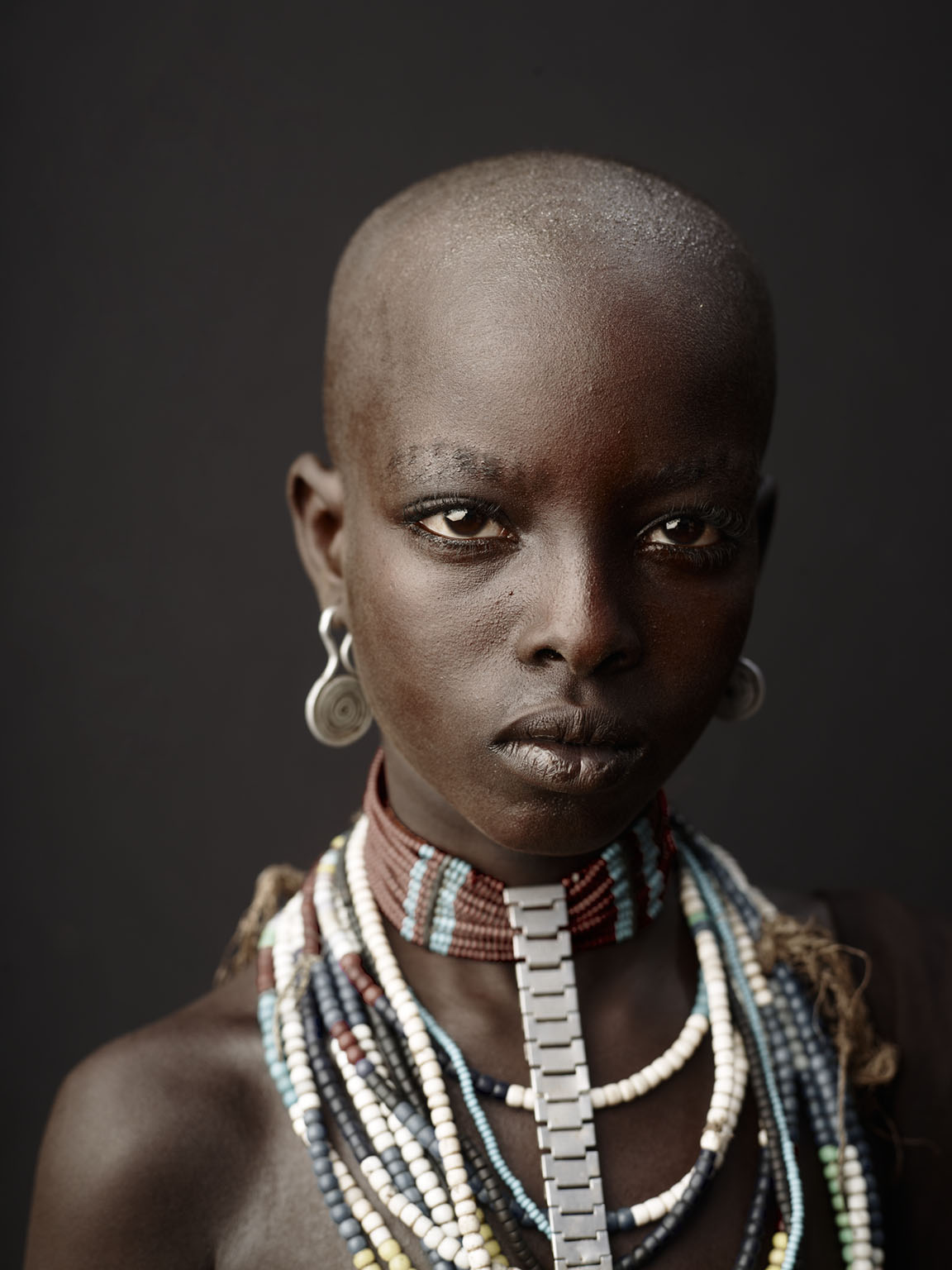
  • Arbore women are well know for their long headdresses. The girls shave their heads to indicate virginity, and only start growing hair after marriage

    Arbore Virgins

    Arbore women are well know for their long headdresses. The girls shave their heads to indicate virginity, and only start growing hair after marriage
    Arbore Tribe, Lower Omo Valley, Ethiopia
  • Arbore Girl

    Arbore Girl

  • Arbore Wife

    Arbore Wife

  • After an armed conflict, the elders of the Arbore will bury the spear heads and weaponry used in battle in order to curse the notion of war.

    Arbore Elder

    After an armed conflict, the elders of the Arbore will bury the spear heads and weaponry used in battle in order to curse the notion of war.
    Arbore Tribe, Lower Omo Valley, Ethiopia
  • Arbore Elder

    Arbore Elder

  • Mursi headdresses are made out of animal bone and leather cow hide. It is both a decoration and an object intimidation for neighboring enemies.

    Nadogomi and Bardomoye

    Mursi headdresses are made out of animal bone and leather cow hide. It is both a decoration and an object intimidation for neighboring enemies.
    Mursi Tribe, Lower Omo Valley, Ethiopia
  • Bardomoye, Son of Nadogomi

    Bardomoye, Son of Nadogomi

  • Feathers are only allowed to be worn on the head by respected elders or celebrated warriors.

    Mursi Elder

    Feathers are only allowed to be worn on the head by respected elders or celebrated warriors.
    Mursi Tribe, Lower Omo Valley, Ethiopia
  • The Mursi are considered some of the most feared warriors in the Omo Valley.

    Portrait of Mursi Man

    The Mursi are considered some of the most feared warriors in the Omo Valley.
    Mursi Tribe, Lower Omo Valley, Ethiopia
  • Automatic weapons have made their way into the South of Ethiopia through the recent conflict in Sudan. In the Omo Valley, the modern weapons are now an every day part of life and used in conflicts with neighboring tribes.

    Kolotola and Olochia

    Automatic weapons have made their way into the South of Ethiopia through the recent conflict in Sudan. In the Omo Valley, the modern weapons are now an every day part of life and used in conflicts with neighboring tribes.
    Mursi Tribe, Lower Omo Valley, Ethiopia
  • Olochia shot an invading Hyena near their home with their family’s Kalashnikov rifle.

    Portrait of Olochia

    Olochia shot an invading Hyena near their home with their family’s Kalashnikov rifle.
    Mursi Tribe, Lower Omo Valley, Ethiopia
  • Due to the influence of the outside world, many young Mursi girl’s are choosing not to stretch their lips with the traditional lip disk.

    Portrait of Mursi Girl

    Due to the influence of the outside world, many young Mursi girl’s are choosing not to stretch their lips with the traditional lip disk.
    Mursi Tribe, Lower Omo Valley, Ethiopia
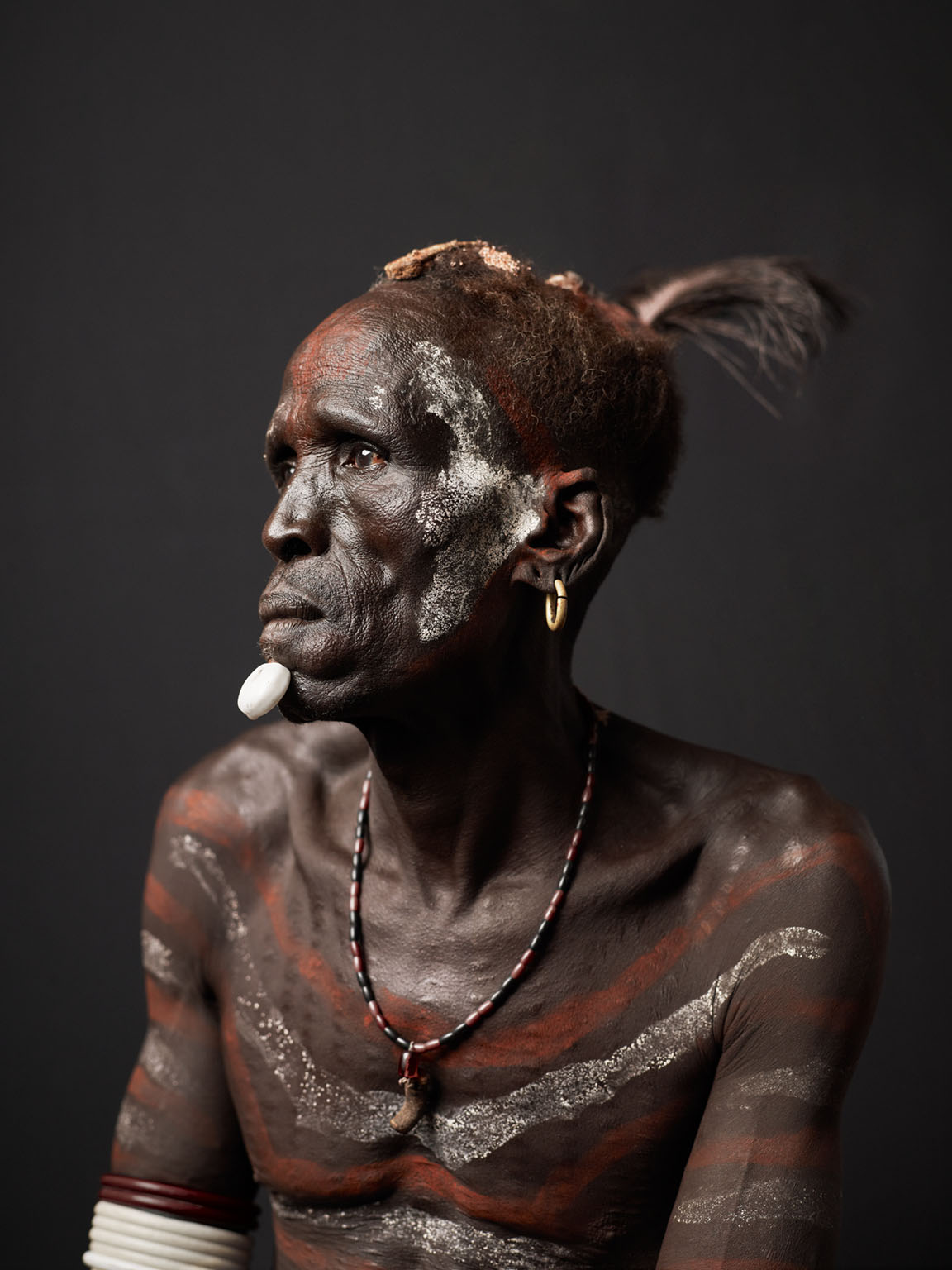
  • Some anthropologists believe that the Mursi started using lip disks as a way to deter slave raiders from stealing women. The Mursi today disagree, and see it as a sign of beauty and status.

    Portrait of Engalo

    Some anthropologists believe that the Mursi started using lip disks as a way to deter slave raiders from stealing women. The Mursi today disagree, and see it as a sign of beauty and status.
    Mursi Tribe, Lower Omo Valley, Ethiopia
  • "I will not loose my culture. I will never leave my culture. Even if I am given clothes, I will still be a Mursi."

    Portrait of Kolotola

    "I will not loose my culture. I will never leave my culture. Even if I am given clothes, I will still be a Mursi."
    Mursi Tribe, Lower Omo Valley, Ethiopia
  • Although scarification on a Mursi man represents taking a life, for a woman it means she has created a new one. Engalo’s scar patterns across her stomach are a sign of motherhood.

    Engalo with Son

    Although scarification on a Mursi man represents taking a life, for a woman it means she has created a new one. Engalo’s scar patterns across her stomach are a sign of motherhood.
    Mursi Tribe, Lower Omo Valley, Ethiopia
  • Mursi Warrior with Clay Handprints

    Mursi Warrior with Clay Handprints

  • Mursi Boy Outside of Home

    Mursi Boy Outside of Home

  • Mursi Boy in Tall Grass

    Mursi Boy in Tall Grass

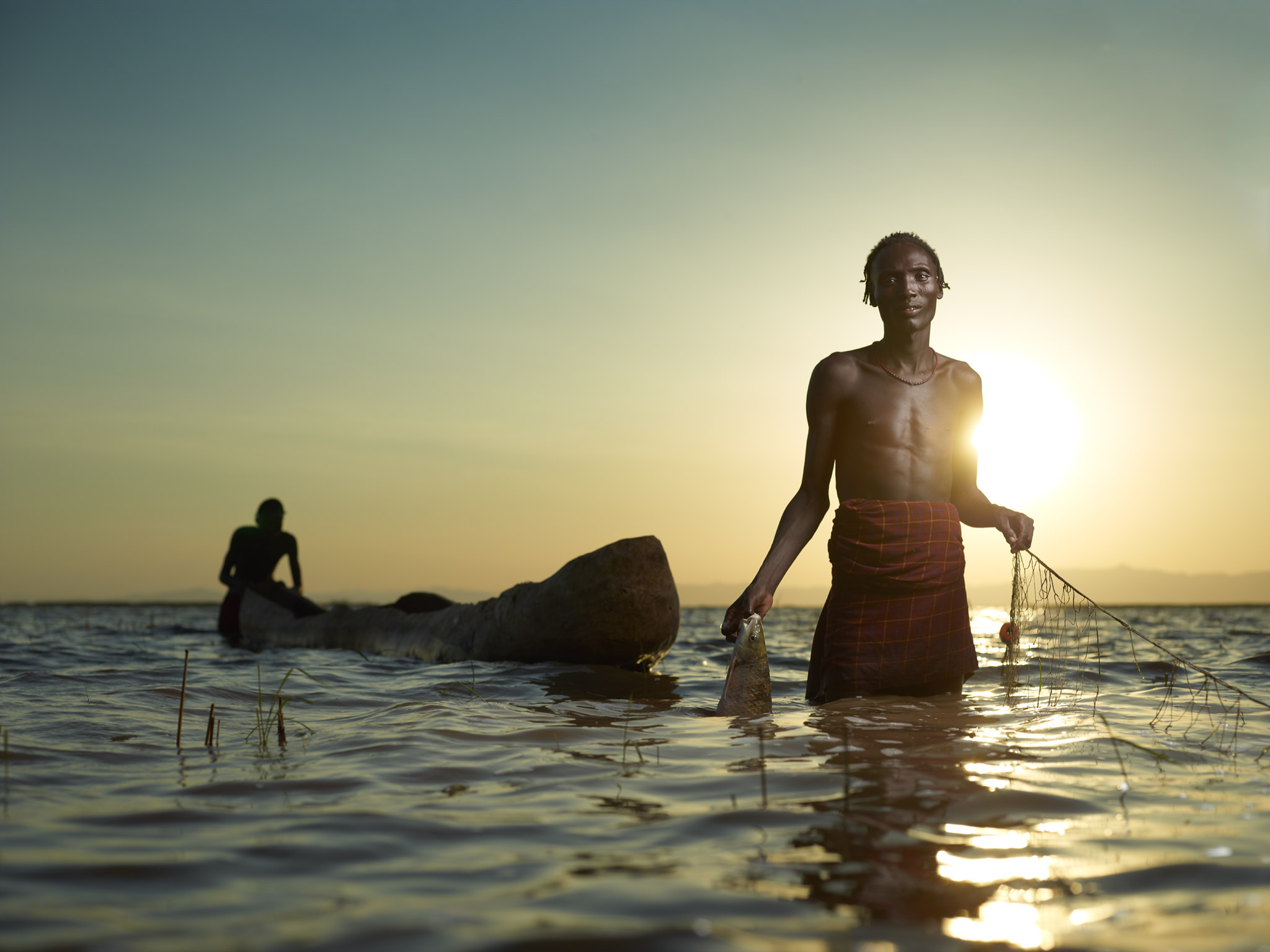
  • The Daasanach are a semi-nomadic tribe numbering approximately 50,000. Their clans stretch across Sudan, Kenya and Southern Ethiopia. Politically, the Daasanach do not feel they belong to either country and prefer to self- govern by their own customs and interpretation of land borders.

    Women of the Daasanach

    The Daasanach are a semi-nomadic tribe numbering approximately 50,000. Their clans stretch across Sudan, Kenya and Southern Ethiopia. Politically, the Daasanach do not feel they belong to either country and prefer to self- govern by their own customs and interpretation of land borders.
    Daasanach Tribe, Lower Omo Valley, Ethiopia
  • Like most of the residents in the Omo Valley, Balo does not directly count her age in years, but knows she was born during a harvest. When she reaches womanhood and is around 17 years old, she will be married to a man slightly older than her. Her dowry will be paid in cattle.

    Portrait of Balo

    Like most of the residents in the Omo Valley, Balo does not directly count her age in years, but knows she was born during a harvest. When she reaches womanhood and is around 17 years old, she will be married to a man slightly older than her. Her dowry will be paid in cattle.
    Daasanach Tribe, Lower Omo Valley, Ethiopia
  • In the past, the tribe was able to roam place to place more freely as pastorialists, but in recent times there is also a dependence on agriculture. Like many tribes of the Omo Valley, the Daasanach depend on the annual flood cycle of the Omo River to nurture their crops.

    Daasanach Girl on Omo River

    In the past, the tribe was able to roam place to place more freely as pastorialists, but in recent times there is also a dependence on agriculture. Like many tribes of the Omo Valley, the Daasanach depend on the annual flood cycle of the Omo River to nurture their crops.
    Daasanach Tribe, Lower Omo Valley, Ethiopia
  • Daasanach Girl

    Daasanach Girl

  • Daodo's headpiece resembles that of a Daasanach hut- created from collected scraps and objects traded with other tribes and villages, then turned into a work of art.

    Portrait of Daodo Swale

    Daodo's headpiece resembles that of a Daasanach hut- created from collected scraps and objects traded with other tribes and villages, then turned into a work of art.
    Daasanach Tribe, Lower Omo Valley, Ethiopia
  • As a high elder chief of the Daasanach, Balo Eryama is responsible for guiding his people both politically and spiritually. Although the Daasanach are known to be warm to outsiders and even welcome other tribal groups into their clans, he refuses Christian missionaries openly.

    Portrait of Balo Eryama

    As a high elder chief of the Daasanach, Balo Eryama is responsible for guiding his people both politically and spiritually. Although the Daasanach are known to be warm to outsiders and even welcome other tribal groups into their clans, he refuses Christian missionaries openly.
    Daasanach Tribe, Lower Omo Valley, Ethiopia
  • Portrait of Ayi Techie

    Portrait of Ayi Techie

  • Daasanach Piercing

    Daasanach Piercing

  • Omo River Low Season

    Omo River Low Season

  • Daasanach Girl

    Daasanach Girl

  • The Daasanach

    The Daasanach

  • The Karo are considered one of the Omo Valley's most endangered ethnic group with an estimated population of only 1500 remaining.

    Karo Elder at Sunset

    The Karo are considered one of the Omo Valley's most endangered ethnic group with an estimated population of only 1500 remaining.
    Karo Tribe, Lower Omo Valley, Ethiopia
  • As an elder of the Karo tribe, Biwa is respected and well adorned as a warrior, carrying rows of scarification representing the enemies he killed in battle. Biwa fought the Mursi and expelled them from the land his tribe now occupies.

    Biwa Bermo

    As an elder of the Karo tribe, Biwa is respected and well adorned as a warrior, carrying rows of scarification representing the enemies he killed in battle. Biwa fought the Mursi and expelled them from the land his tribe now occupies.
    Karo Tribe, Lower Omo Valley, Ethiopia
  • Karo Mother and Child

    Karo Mother and Child

  • Young Karo Girl Near Overlook

    Young Karo Girl Near Overlook

  • Karo Mother at Sunrise

    Karo Mother at Sunrise

  • Karo Boy at Sunrise

    Karo Boy at Sunrise

  • Akeri patrols the Western side of the Omo River. The Nyangatom live on the other side, a tribe that has raided Karo land many times in the past.

    Akeri

    Akeri patrols the Western side of the Omo River. The Nyangatom live on the other side, a tribe that has raided Karo land many times in the past.
    Karo Tribe, Lower Omo Valley, Ethiopia
  • Akeri

    Akeri

  • Omo River

    Omo River

  • Portrait of Magi

    Portrait of Magi

  • Portrait of Magi

    Portrait of Magi

  • “We are progressing and soon we will move out of this place.”

    Damo Dori

    “We are progressing and soon we will move out of this place.”
    Karo Tribe, Lower Omo Valley, Ethiopia
  • Karo Boy With Clay Paint

    Karo Boy With Clay Paint

  • Karo Boy with Nail Piercing

    Karo Boy with Nail Piercing

  • Biwa Bermo

    Biwa Bermo

  • Bona is the highly respected chief of his village, Labaltoy. In Hamer culture, the name Bona is given to an aggressive dog or animal. It is not a common name for a human. When he was young, Bona showed strong signs of aggression and strength, causing his mother to choose this name.

    Portrait of Vicious Dog

    Bona is the highly respected chief of his village, Labaltoy. In Hamer culture, the name Bona is given to an aggressive dog or animal. It is not a common name for a human. When he was young, Bona showed strong signs of aggression and strength, causing his mother to choose this name.
    Hamer Tribe, Lower Omo Valley, Ethiopia
  • Vicious Dog

    Vicious Dog

  • The iron rings around the neck represent that Igie is the second wife of her husband. A first wife will only wear one ring.

    Portrait of Igie

    The iron rings around the neck represent that Igie is the second wife of her husband. A first wife will only wear one ring.
    Hamer Tribe, Lower Omo Valley, Ethiopia
  • Portrait of Gelea

    Portrait of Gelea

  • Young Hamer Girl

    Young Hamer Girl

  • Hamer bull jumping ceremonies are a rite of passage for a boy that marks the transition into manhood. He will make three runs across the backs of cattle lined up in a row. The bull jumper waits nervously for the ceremony to begin.

    The Bull Jumper

    Hamer bull jumping ceremonies are a rite of passage for a boy that marks the transition into manhood. He will make three runs across the backs of cattle lined up in a row. The bull jumper waits nervously for the ceremony to begin.
    Hamer Tribe, Lower Omo Valley, Ethiopia
  • This initiate is young and must further prove himself to his village by surviving on his own in the wilderness after the jump. This period can last for months. Upon his return, he will be respected as an adult and be able to take a wife.

    Rite of Passage

    This initiate is young and must further prove himself to his village by surviving on his own in the wilderness after the jump. This period can last for months. Upon his return, he will be respected as an adult and be able to take a wife.
    Hamer Tribe, Lower Omo Valley, Ethiopia
  • Hamer women related to the jumper beg to be whipped at the ceremonies. The scars are viewed as a sign of womanhood and beauty, and a symbol of painful reverence endured for the young man.

    Whipping of the Maza

    Hamer women related to the jumper beg to be whipped at the ceremonies. The scars are viewed as a sign of womanhood and beauty, and a symbol of painful reverence endured for the young man.
    Hamer Tribe, Lower Omo Valley, Ethiopia
  • Hamer Scarification

    Hamer Scarification

  • Pregnant Hamer Woman

    Pregnant Hamer Woman

  • Portrait of Hamer Girl

    Portrait of Hamer Girl

  • The Hamer have a belief in spirits are which are assigned to physical objects on Earth. They observe the interconnectedness of both living things and inanimate objects. When asked about their religion, most will reply they don't have one. They don't have a name for their belief system, it is viewed simply as a way of life. 


    The Animist

    The Hamer have a belief in spirits are which are assigned to physical objects on Earth. They observe the interconnectedness of both living things and inanimate objects. When asked about their religion, most will reply they don't have one. They don't have a name for their belief system, it is viewed simply as a way of life. 

    Hamer Tribe, Lower Omo Valley, Ethiopia
  • Outa Vri is a warrior of high status, having assisted in a raid upon the Daasanach for killing a friend's family member. He shows his status with a clay headpiece with ostrich feather, and will eventually obtain scarification across his chest. The number of earrings worn in one ear indicate his number of wives. 


    Outa Vri

    Outa Vri is a warrior of high status, having assisted in a raid upon the Daasanach for killing a friend's family member. He shows his status with a clay headpiece with ostrich feather, and will eventually obtain scarification across his chest. The number of earrings worn in one ear indicate his number of wives. 

    Hamer Tribe, Lower Omo Valley, Ethiopia
  • At puberty, women of the Hamer tribe start applying a deep red clay to their skin and hair.

    Hamer Woman Outside Hut

    At puberty, women of the Hamer tribe start applying a deep red clay to their skin and hair.
    Hamer Tribe, Lower Omo Valley, Ethiopia
  • Hamer Man

    Hamer Man

  • The Hamer make their clothing out of reused goat skin, stretched and dried in the sun. In recent times, beaded decorations are also woven into the fabric.

    Sunrise

    The Hamer make their clothing out of reused goat skin, stretched and dried in the sun. In recent times, beaded decorations are also woven into the fabric.
    Hamer Tribe, Lower Omo Valley, Ethiopia
  • Portrait of Hamer Youth

    Portrait of Hamer Youth

1 / 76
show thumbnails play fullscreen slideshow