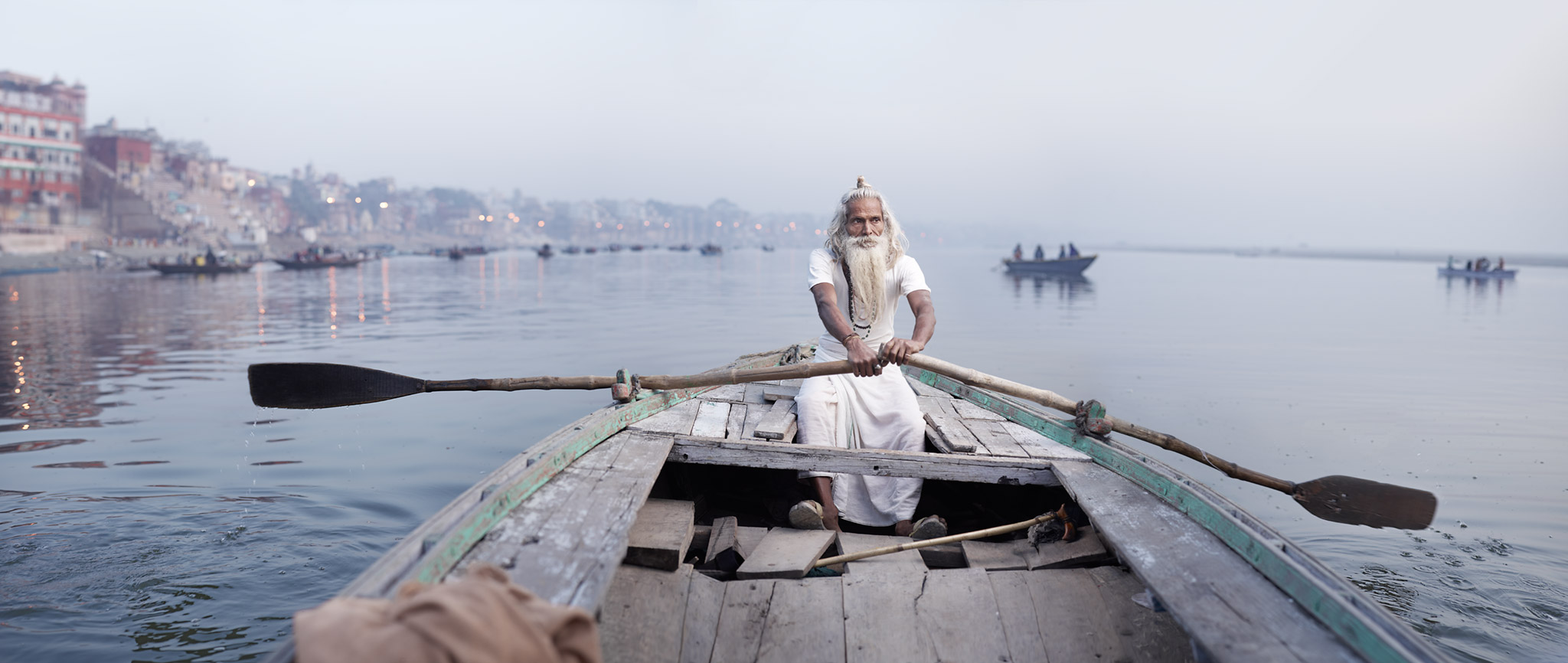
Click image to enlarge: Ascetic priest Baba Vijay Nund rows a boat along the Ganges River. Varanasi, India
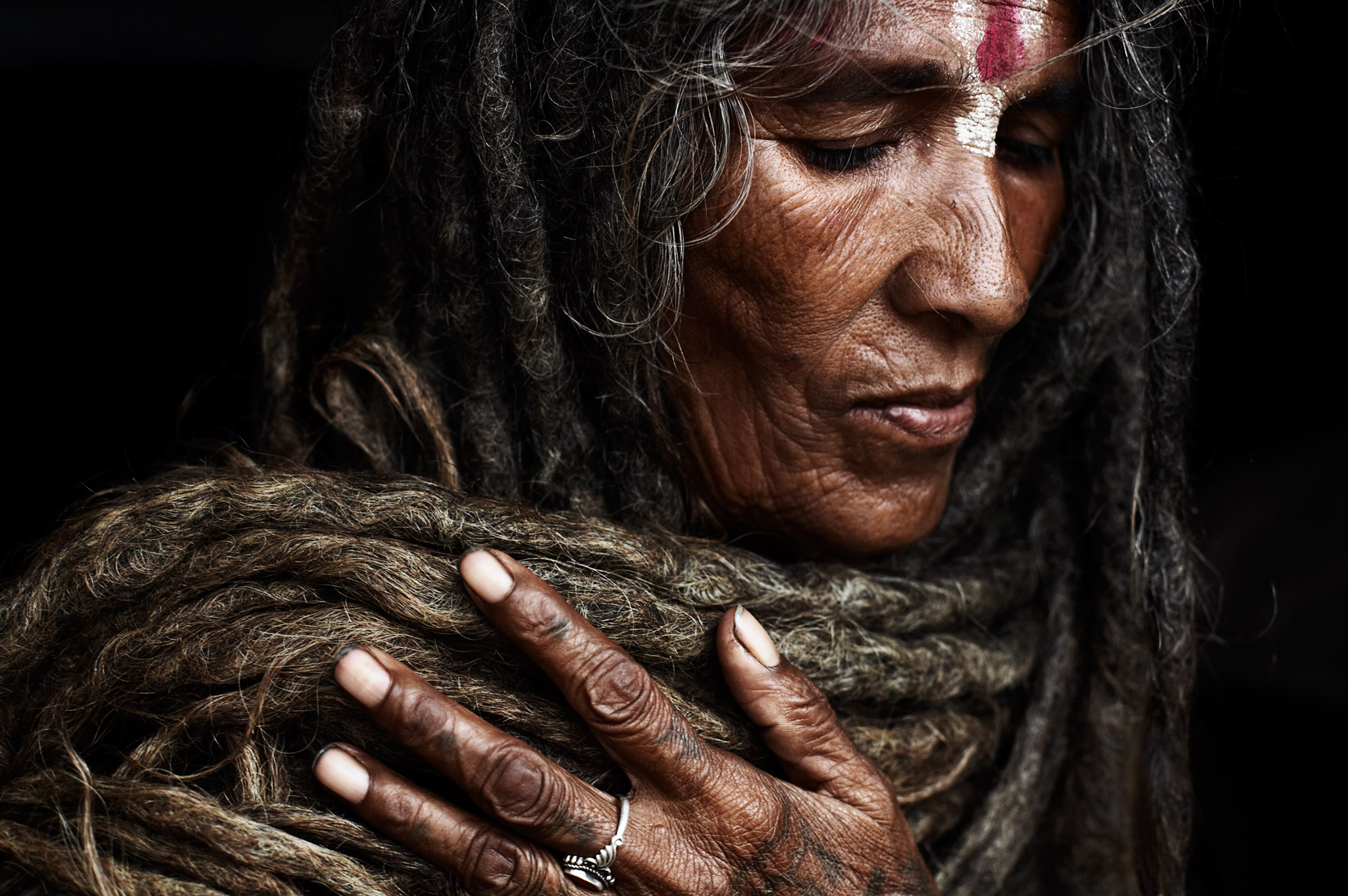
I went to India for the third time last March, 2011. I spent a month in Varanasi with my good friends Cale Glendening and Ryan McCarney working on the latest image series for my “Holy Men” image collection. I am slowly building the collection into a unified volume of work that features religious ascetics from around the world.
I’ve been working with some of the same subjects from Varanasi since I was 16 years old, and knowing these people has truly been a life changing experience. When a rare outside viewpoint gives context to your own life, you can’t help but feel the mold within you bend and twist into something new. Cale shot a documentary about the whole trip, which he is currently color grading and will release soon. For now, I’d like to give a preface to the photo series. This particular blog post is not about gear, and it’s not about lighting… I’ll save all that is for specific future articles.
The images on this blog are quite small. To view the larger complete gallery in my portfolio, click here.

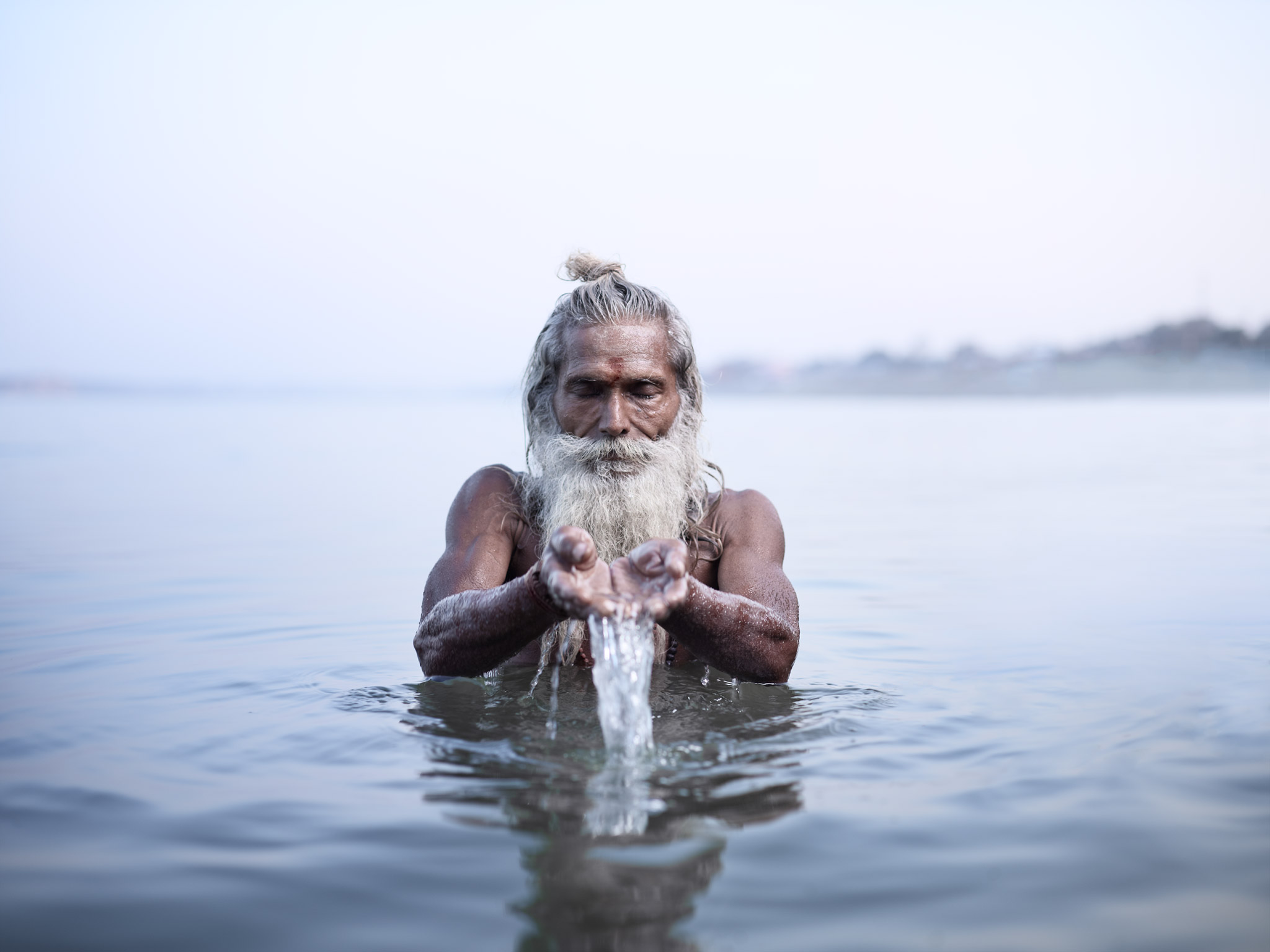
Click image to enlarge: Vijay Nund performing morning rituals in the Ganges River, the most sacred river in Hinduism.
Varanasi is one of the oldest inhabited cities in the world; it’s thought that people may have lived in Varanasi for about 3,000 years or longer. It’s the epicenter of Hindu faith, similar to Jerusalem for Christians and Mecca for Muslims. Every time I’ve been to Varanasi, I’ve photographed the city and never quite been happy with the results. Finally, I’ve got something I’m content with (but naturally, will no doubt begin to find things wrong with them very soon.)

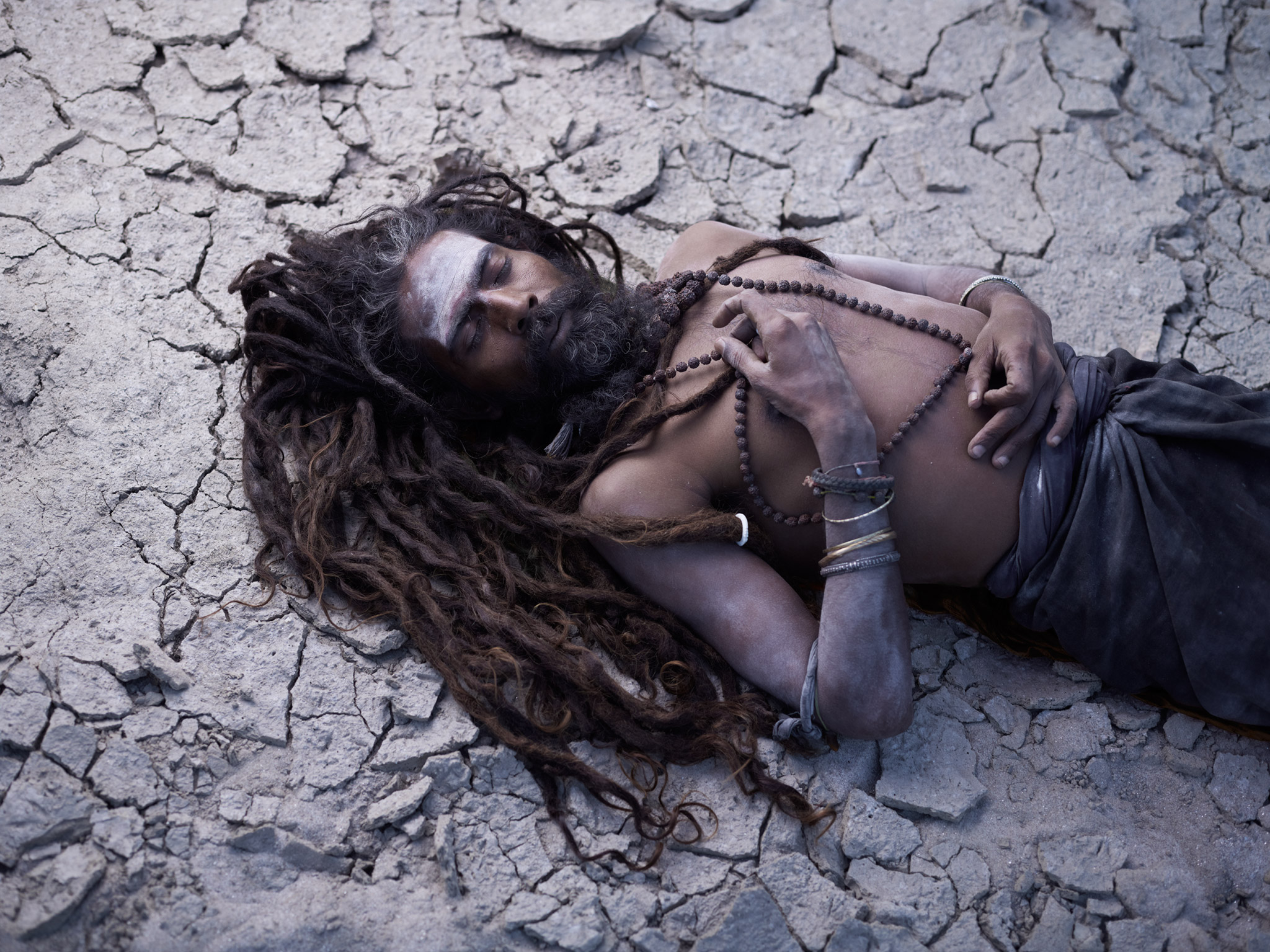
Click image to enlarge: Aghori sadhus cover themselves with human ash, which is the last rite of the material body.
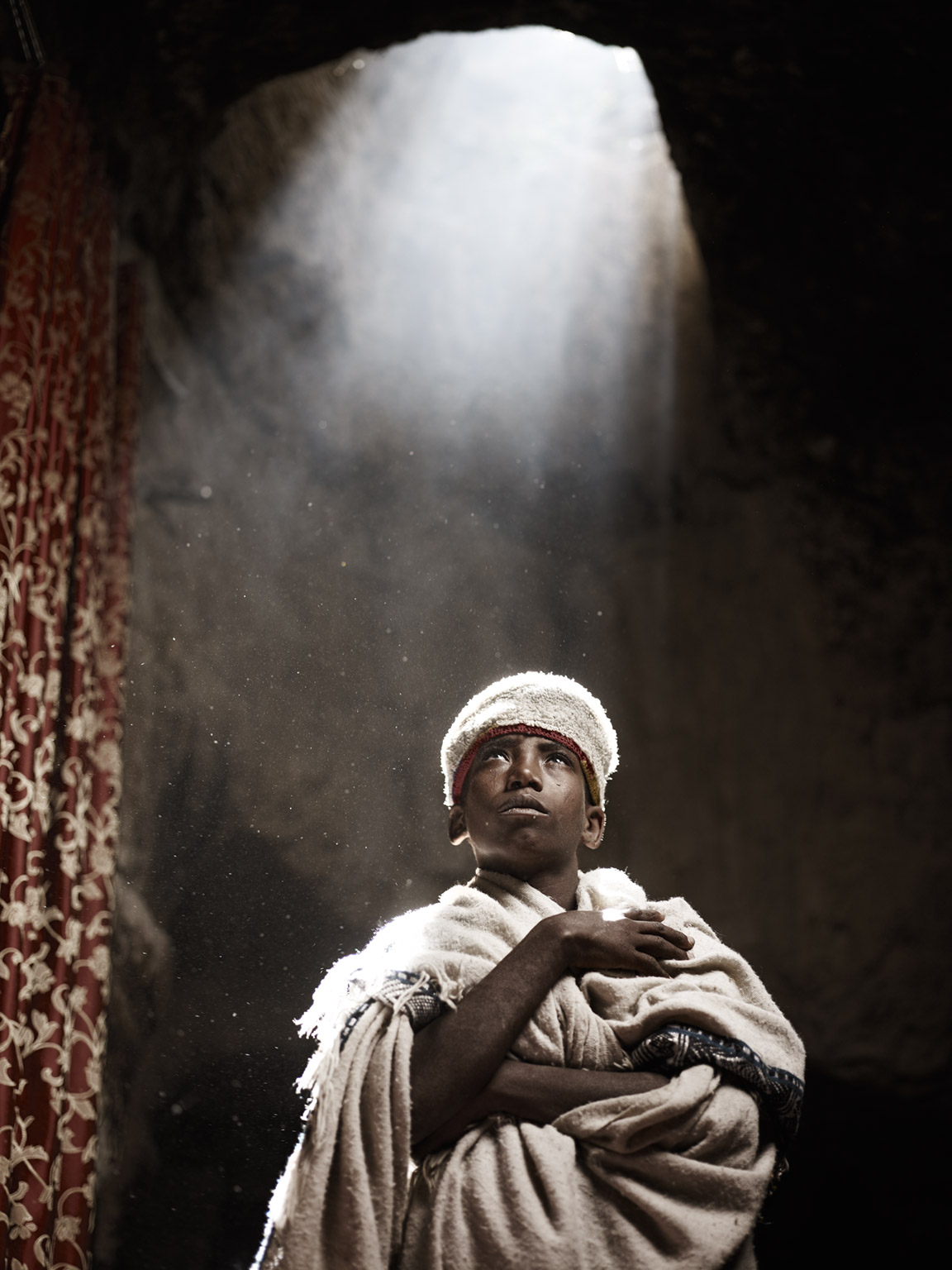
I began the Holy Men collection with a photo series from the North of Ethiopia focusing on Coptic Christianity. In this new series, Sadhus and religious students are the featured subjects. Although Coptic Christian monks and Sadhus live in different corners of the world, the connection all these subjects have to each other is profound. Almost every major religion breeds ascetics; wandering monks who have renounced all earthly possessions, dedicating their lives to the pursuit of spiritual liberation. Their reality is dictated only by the mind, not material objects. Even death is not a fearsome concept, but a passing from the world of illusion.
There is a large focus on Aghori, an intense sect of Sadhu infamous for overcoming all things taboo. They may meditate on corpses, eat human flesh as part of a sacred ritual, or keep a skull as a reminder of the impermanence of life.

The Aghori have a profound connection with the dead.

Click image to enlarge: Aghori sadhus inside a sunken Shiva temple at Scindia Ghat, on the banks of the River Ganges.

Baba Mooni conducting Aghori Puja

Click image to enlarge: Ram Das beside boat wreckage in Varanasi, India.

Portrait of Ram Das
These sadhus live a very different life from most of us blog readers. In Western experiences, the most similar lifestyle might be that of a monk. A sadhu renounces his earthly life, all his worldly attachments, leaves home and family, and takes on the lifestyle of an ascetic. As part of this renunciation, they also leave behind their clothes, food and shelter, and live on the generosity of others. Another part of renouncing your former life is to attend your own funeral and die to yourself, and be reborn into your new life as a sadhu. To many Hindus, Sadhus serve as an earthly reminder of the divine, and may take on the role of a healer as someone who can help to rid others of negative energies. As a part of their daily routines, sadhus will arise before sunrise and bathe in cold water, before starting their daily prayers.




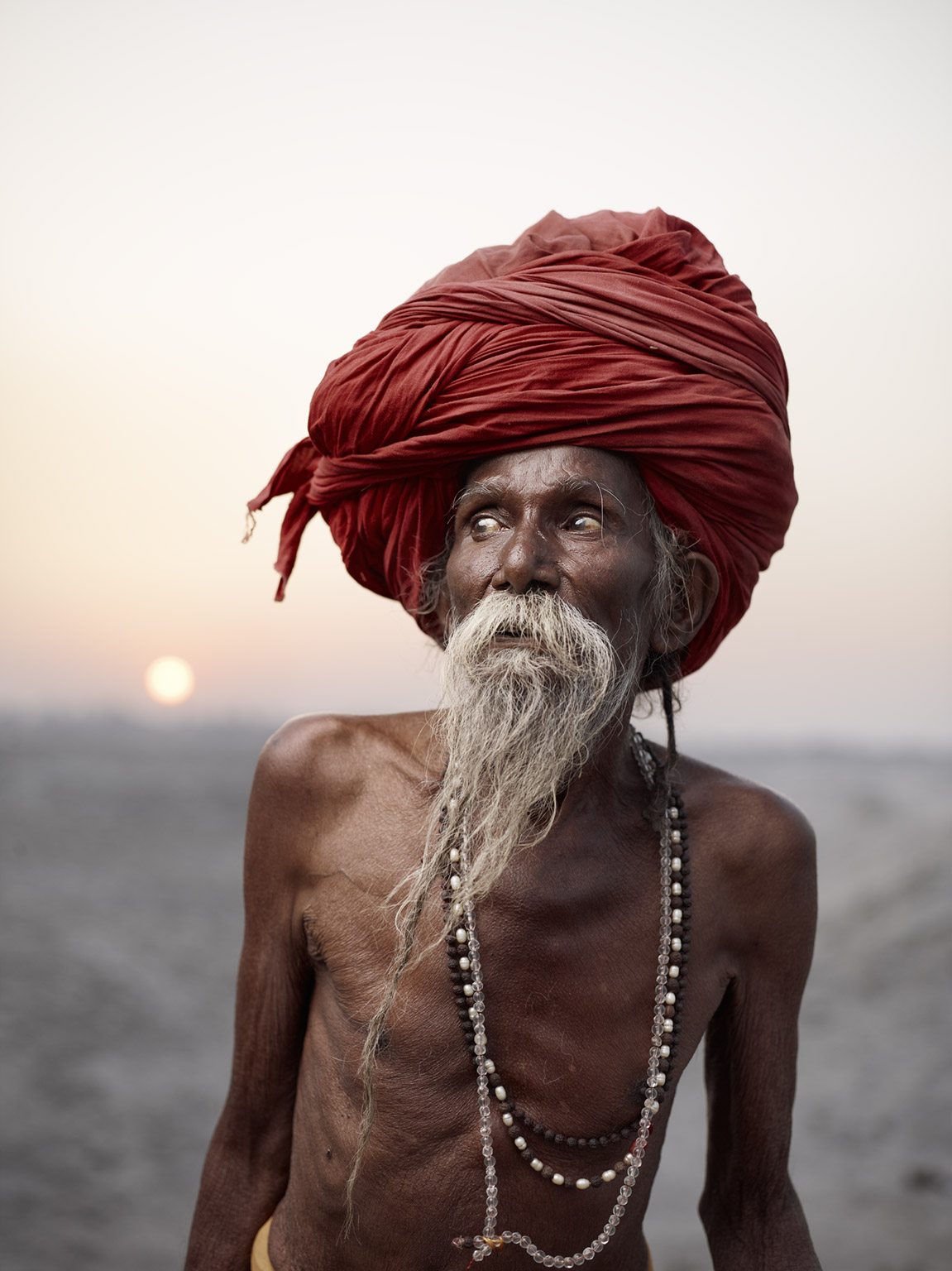
When he was young, Lal Baba’s parents arranged a marriage for him. Uncertain about his future, he ran away from home in Bihar Siwan and took up the lifelong task of becoming a sadhu.

Lal Baba has dreadlocks several meters long, which have been growing for over 40 years. To sadhus, dreadlocks are a sign of renunciation and a life dedicated to spirituality.

Lal Baba’s life is to travel. Even at 85 years old, he will continue to travel from holy place to holy place in India and Nepal.

Click image to enlarge: Magesh Nalla left a well paid job as an IT computer consultant to pursue to path of Aghora. After years of practice, he finds no temptation to return to his old life.

Portrait of Magesh Nalla

Portrait of Baba Nondo Somendrah

Saurav Kumar Pandey,
Batuk Student.
The Ganges River is also an important subject in my photo series, creeping into the background, giving the holy men a sense of environment. In the Hindu faith and Indian society, the Ganges River holds a prominent, special, and sacred place. Hindus feel that the Ganges is divine, in part, because it flows from the heavens. This is understandable when you realize that the Ganges is primarily composed of Himalayan meltwater, which falls from the heavens as snow. One of the sacred aspects of the Ganges is that Hindus believe that bathing in the Ganges reduces a person’s sins and increases the chances for liberating the person from the cycle of life, death and rebirth.
Click image to enlarge: Amit Byasi & Banmi Shri Ra,
Batuk Students.

Banmi Shri Ra,
Batuk Student.
Although considered extremely polluted with feces, garbage and industrial waste, the Ganges is considered sacred, some believe there’s nothing that can be done to diminish its holiness. The Ganges has been the spiritual and physical lifeblood of northern India for ages.

Click image to enlarge: Baba Vijay Nund on the steps of Chet Singh Ghat on the banks of the Ganges River.

Baba Vijay Nund outside his ashram.

Click image to enlarge: Sunken temple in Varanasi, India
I look forward to expanding the collection even further in the future, and exploring the other venues around the world that contain these unique perspectives that challenge the way we interpret the world around us. There are so many places to explore and people to photograph, it keeps me up at night.

Ashok, Cale, Magesh and I

This collection is currently on display at Open Shutter Gallery in Durango, Colorado until June 7th, 2012.
JL